Reconstruct responsibility
Use crash reports, scene photographs, vehicle damage, witness accounts, nearby video, traffic controls, phone or vehicle data, and qualified analysis when the collision mechanism is disputed.
Florida car accidents
Getting involved in a car accident can range from a mild inconvenience to a life-changing traumatic event. When someone else is driving recklessly, ignoring posted signs, or driving under the influence, they’re putting not only their own life in danger, but also the lives of the people around them.
If you’re injured in a car accident, you may not know what to do next. You may be suffering from the pain of your injuries, dealing with the stress of medical bills, and wondering whether that insurance settlement offer is really the only compensation you’re going to get.
That’s why we’re here.
Call (305) 793-8687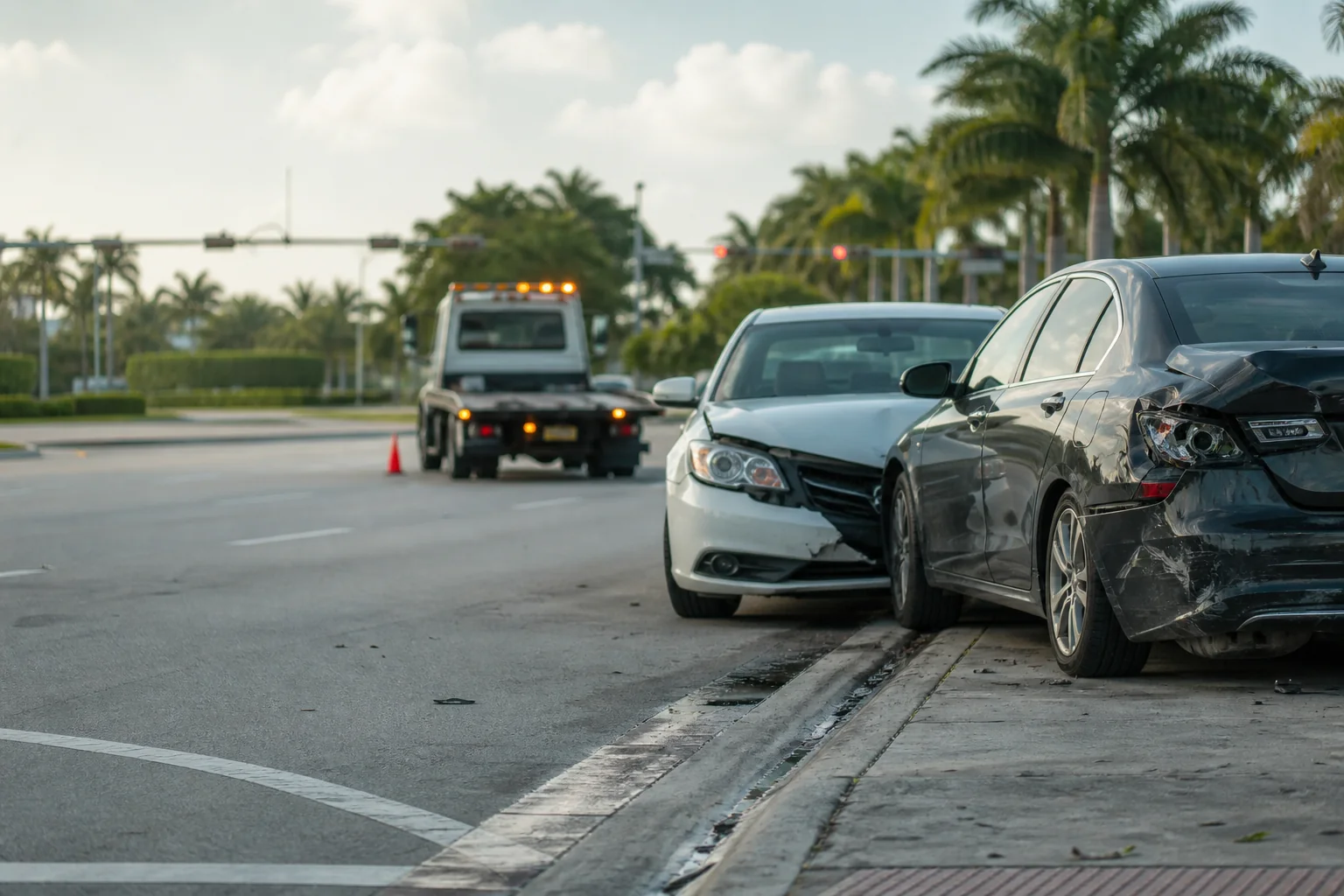
How a car accident lawyer can help
Insurance calls, medical bills, missed work, vehicle repairs, and settlement paperwork can arrive while you are still trying to understand the injury. Having a lawyer on your side gives you one place to bring those questions and someone whose job is to protect your interests.
The Law Offices of Manny Arce evaluates the claim, deals with the insurance issues, investigates responsibility, documents the losses, and advises whether a proposed settlement fairly accounts for the evidence. If a reasonable resolution is not available, the firm is prepared to pursue the case in court.
How a strong claim is built
Use crash reports, scene photographs, vehicle damage, witness accounts, nearby video, traffic controls, phone or vehicle data, and qualified analysis when the collision mechanism is disputed.
Organize emergency care, diagnostic testing, specialist opinions, treatment progress, prior conditions, impairment, future care, and the practical limits the injury creates.
Evaluate PIP, bodily-injury liability, uninsured or underinsured motorist protection, umbrella coverage, vehicle ownership, employer involvement, health-plan interests, and policy defenses.
Common causes of car accidents
Most collisions are preventable. The investigation should identify the conduct that actually caused the crash rather than relying only on labels or assumptions.
Common car accident injuries
Some injuries are immediately apparent. Others become clearer through medical evaluation, diagnostic testing, and the way symptoms affect work and daily life.
Florida’s no-fault system
Florida personal injury protection coverage may pay limited medical and disability benefits without deciding who caused the crash. Current law generally requires initial medical services and care within 14 days, and the available PIP medical benefit can depend on whether a qualifying provider determines that an emergency medical condition exists.
That is only one layer of the case. A claim against a responsible driver may require proof of negligence, causation, damages, available bodily-injury coverage, and—when noneconomic damages are sought—Florida’s statutory injury threshold. Uninsured or underinsured motorist coverage may become critical when the responsible driver lacks enough insurance.
Compensation after a car accident
Compensation is never automatic, and the available categories depend on the evidence, insurance, Florida law, and the facts of the collision. A properly developed claim may address:
Emergency treatment, hospital care, physicians, diagnostic testing, medication, surgery, rehabilitation, therapy, medical equipment, and reasonably supported future needs.
Income lost while recovering and, when the injury causes lasting work limitations, the supported reduction in the person’s ability to earn in the future.
Physical pain, mental anguish, disability, disfigurement, inconvenience, and loss of the ability to participate in ordinary activities, when recoverable under Florida law.
Repair or replacement costs, loss of use, personal property damage, and a supported diminished-value claim when the governing coverage and evidence allow it.
A spouse or another legally recognized claimant may have a derivative claim for loss of services, companionship, or consortium, depending on the injury and relationship.
When a collision is fatal, Florida’s Wrongful Death Act determines which losses may be pursued by the personal representative for eligible survivors and the estate.
Insurance companies may argue that the injured person shares responsibility or that a medical condition came from something other than the crash. Florida’s current comparative-fault rules make scene evidence and medical causation especially important. The response should be a documented record, not a conclusion without support.
Common questions
Move to safety when possible, call 911 when anyone may be injured or the scene is hazardous, exchange identifying and insurance information, preserve photographs and witness details, obtain appropriate medical care, and notify your insurer. Do not put yourself in danger to collect evidence.
Florida’s current personal injury protection statute generally requires initial services and care within 14 days of the motor-vehicle accident for medical benefits. Eligibility, benefit levels, exclusions, and the required provider depend on the policy and medical circumstances, so treatment decisions should be based on medical need rather than a website summary.
PIP may provide limited medical and disability benefits without regard to fault. A liability claim addresses damages caused by another party, subject to available insurance, proof of fault, Florida’s injury threshold for certain noneconomic damages, and other defenses. The two coverages should be evaluated together.
Your obligations to your own insurer may differ from a request made by another party’s carrier. Before giving a broad recorded statement, signing a release, or providing a broad medical authorization, understand who is requesting it, why it is requested, and how it may be used.
Uninsured or underinsured motorist coverage, resident-relative policies, vehicle ownership, employer involvement, and other coverage may need to be reviewed. A denial or low liability limit should not end the investigation before the available policies and responsible parties are identified.
Current Florida law generally provides a two-year limitations period for negligence actions arising after March 24, 2023, but different claims, defendants, policies, notice requirements, and accident dates can change the analysis. Evidence can disappear much sooner, so the deadline should be confirmed from the specific facts.
A confidential review can address the crash, the available coverage, the medical record, and the steps needed to protect the claim.
This information is general and is not a prediction of outcome or a substitute for advice about a particular crash, policy, or deadline.
Clear fee policy
Personal injury matters are handled on a contingency-fee basis. Attorney’s fees and reimbursement of advanced case costs are paid only from a recovery obtained through settlement or verdict, as provided in the written fee agreement.