Turns through crosswalks and bike lanes
A driver focused on vehicle traffic may turn across the path of a person walking or riding through the intersection. Signal timing, right of way, speed, and sight lines matter.
Pedestrian & bicycle accidents
Walking and cycling are part of everyday life in Florida. Yet many roads, intersections, parking areas, and construction zones were not designed with vulnerable road users in mind. Even where a bike lane or crosswalk exists, it offers little physical protection from a moving vehicle.
After a collision, the injured person may be unable to explain what happened while a driver, insurer, or crash report begins shaping the story. A complete investigation must look beyond assumptions and reconstruct what each person could see, where they were traveling, and how the impact occurred.
Your case should begin with the roadway evidence.
Call (305) 793-8687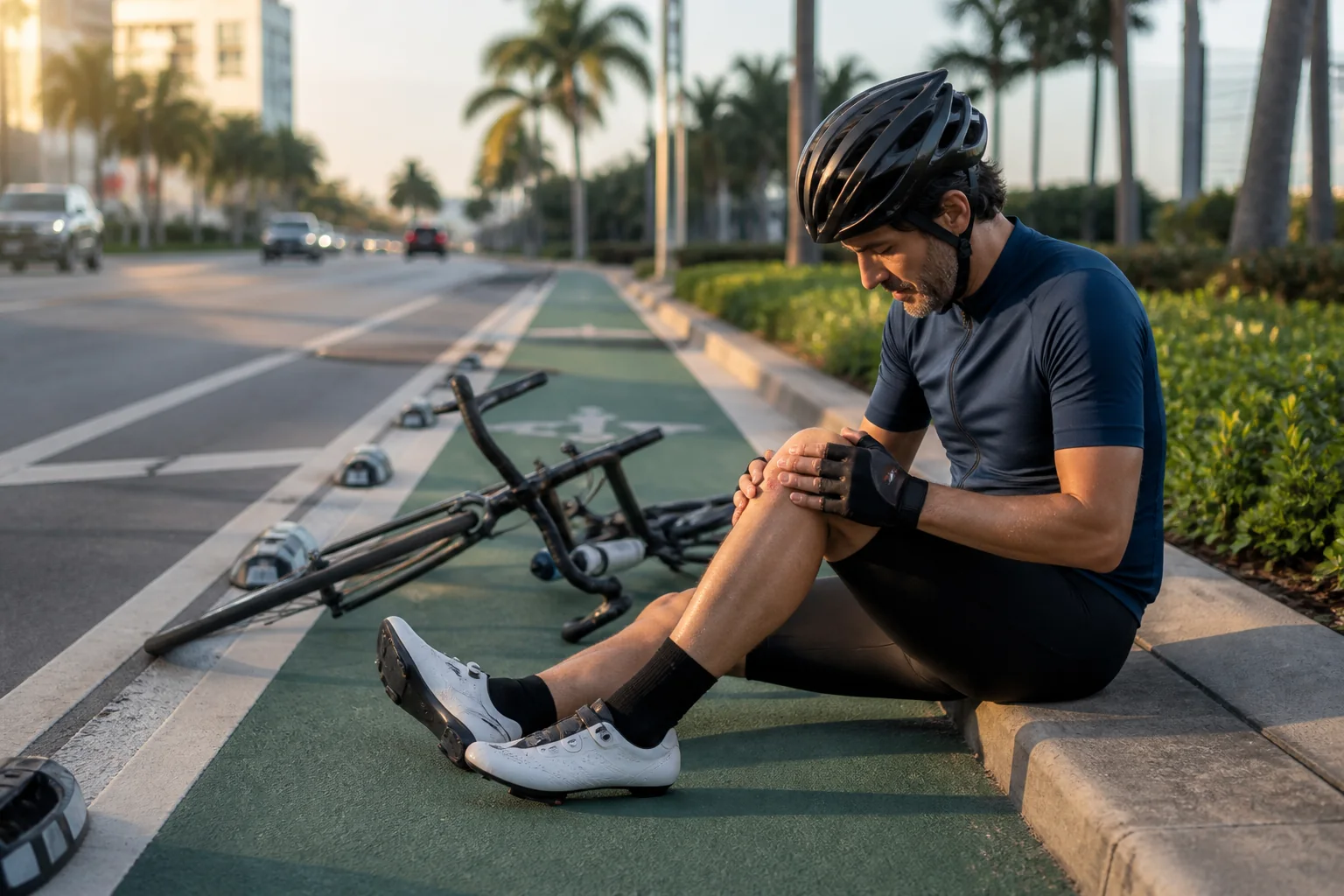
How the firm can help
The Law Offices of Manny Arce investigates visibility, right of way, driver conduct, roadway design, vehicle movement, and the physical evidence. The firm also develops the medical and financial proof needed to show how the collision changed the client’s work, independence, and daily life.
How these collisions happen
A driver focused on vehicle traffic may turn across the path of a person walking or riding through the intersection. Signal timing, right of way, speed, and sight lines matter.
A vehicle that passes too closely can strike a cyclist directly or force the rider off the roadway. Florida requires motorists to use care and provide legally sufficient passing space.
An opened vehicle door, delivery stop, rideshare pickup, parking maneuver, or vehicle entering from a driveway can place a pedestrian or cyclist directly in danger.
A phone, navigation screen, passenger, fatigue, alcohol, drugs, or another distraction can delay recognition of someone who has no protective enclosure.
Excess speed reduces reaction time and increases impact force. Failure to stop or yield at a crosswalk, signal, stop sign, or driveway can lead to catastrophic injury.
Poor lighting, blocked sidewalks, debris, drainage problems, temporary traffic patterns, missing markings, and unsafe work zones may require evaluation beyond driver conduct.
Florida roadway rights and duties
Florida law assigns duties to drivers, pedestrians, and bicyclists. Those duties depend on the location, signals, marked crossings, bicycle facilities, direction of travel, and other circumstances. Bicyclists generally have vehicle-related rights and duties, subject to bicycle-specific rules; drivers must exercise due care around pedestrians and cyclists.
Comparative-fault allegations are common. They should be tested against the physical evidence, timing, visibility, roadway design, and each person’s actual conduct—not accepted simply because the injured person was outside a car.
After the collision
Obtain emergency and follow-up medical care. Report the collision and identify the driver, vehicle, witnesses, and responding agency. When possible, photograph the vehicle, bicycle, roadway, signals, lighting, skid or debris marks, visible injuries, and damaged property.
Do not repair or discard the bicycle, helmet, lights, clothing, shoes, or phone until they can be evaluated. Save trip or fitness-app data, receipts, messages, and insurance communications. Nearby business, residential, vehicle, or transit video may be overwritten quickly.
Because pedestrians and cyclists lack a protective shell, claims may involve brain or spinal injuries, fractures, internal injuries, scarring, road rash, surgeries, rehabilitation, disability, or death. The damages analysis must account for future consequences as carefully as the immediate medical bills.
Common questions
A person riding a bicycle generally has the rights and duties applicable to other vehicle operators, subject to bicycle-specific rules and exceptions. Road position, bicycle lanes, lighting, direction of travel, signals, and the circumstances of the collision must all be evaluated.
Visibility is an evidence question, not a complete defense by itself. Lighting, clothing, vehicle headlights, sight lines, speed, weather, roadway design, signals, surveillance, and the driver’s attention can all affect what should have been seen and when.
Preserve the bicycle, helmet, clothing, shoes, lights, reflectors, damaged personal property, photographs, video, witness details, fitness or trip data, vehicle information, and medical records. Nearby cameras and vehicle data may require prompt requests.
Potentially. Florida uses a modified comparative-fault system for many negligence claims. Any alleged fault should be analyzed from the complete facts because it may reduce or, at a statutory threshold, bar recovery.
The personal representative of the estate may be able to bring a wrongful-death action for losses recognized by Florida law. Eligible survivors and damages depend on the family structure, estate, cause of death, and governing statute.
A free, confidential consultation can address the roadway, vehicle, coverage, injuries, and immediate preservation needs.
This information is general and is not a prediction of fault or outcome. Current law and the specific facts control.
Clear fee policy
Personal injury matters are handled on a contingency-fee basis. Attorney’s fees and reimbursement of advanced case costs are paid only from a recovery obtained through settlement or verdict, as provided in the written fee agreement.